Capture the magic or get lost in It? Five Days at ADE
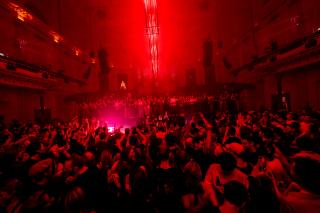
Thirty years of Amsterdam Dance Event. What started with a few hundred industry professionals and a handful of venues has grown into a five-day celebration of electronic music and culture, with more than 1,300 events, over 3,600 announced artists and more than 300 venues across Amsterdam. From the darkest underground clubs to massive festival productions, five days in which every corner of electronic music finds its own crowd. You can't possibly be everywhere. And to be fair, I didn't even try.
Somewhere between the moment and the memory
This time, I let myself be swept along by whatever ADE had in store for me. From intimate, dark clubs to enormous festival productions. From underground techno to uplifting house and audiovisual spectacles. More often than not, I ended up somewhere without really knowing what to expect. I went to far more events than the ones featured in this story. I could easily have written an entirely different article about musical discoveries, unexpected encounters or the future of electronic music. ADE is so much bigger and more diverse than anything I could possibly capture in five days.
But somewhere between all those different worlds, something caught my attention. I hadn't gone looking for it, but the same contradiction kept showing up. At some events, thousands of phones were raised to capture every special moment. At others, everything was done to keep cameras off the dancefloor. The more nights I experienced, the more I started wondering what those cameras are actually doing to us. To the music, the audience, the artists and, ultimately, to the way we present the night to the outside world.
To capture it or just feel It?
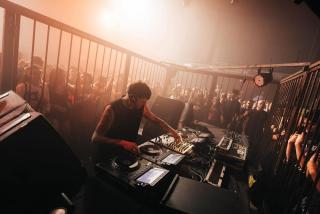
Should I take out my phone or not? I hesitate. In front of me stands Oscar Mulero, one of my absolute techno heroes, towering above a sea of dancing bodies. I'd recognise him from hundreds of metres away. The subtle way his shoulders move with the rhythm. His head slightly lowered, his eyes focused on his hands. No theatrical gestures or forced interaction with the crowd. He doesn't need to prove anything. He's simply there. Meanwhile, his dark, layered, hypnotic techno fills the enormous tent at Dockyard. I can feel the music getting under my skin.
How I'd love to hear him in some tiny, dark, sweaty basement, where the distance between artist and audience almost disappears. His music feels too intimate for a space this huge, yet somehow he still manages to pull me in completely. Around me, the first phones rise into the air. I hesitate a little longer, then reach for my camera after all. Not to show everyone on Instagram that I was there. But because I want to keep this moment. For myself. For later, when five days of ADE are over and I'm back on my sofa, wanting to return, just for a moment, to that music, those people and that feeling.
A few hours later, that same camera gets covered with a sticker at the entrance to the former Bijlmerbajes prison. I don't mind. In fact, I rather like it. Nobody filming, nobody wondering whether they'll end up somewhere online the next morning. Two completely different experiences, on the same night, at the same Amsterdam Dance Event. And somehow, both feel perfectly natural.
And there's the paradox: more and more clubs are banning cameras from their dancefloors, while the music industry relies on images of those very same dancefloors to attract (new) audiences. Artists need to create content, promoters need to sell their events, and everyone else is posting. So who actually gets to decide how we document the night? And if we'd rather not film it anymore, how do we make it visible to people who've never experienced it?
From the mud into the Bajes
Dockyard Festival at Amsterdam's Havenpark is a massive production. Together with Mystic Garden, it transforms the vast festival grounds into two contrasting worlds: one colourful and exuberant, the other raw and industrial. Inside gigantic festival tents, artists, labels and promoters present their own line-ups, each attracting a crowd that seems to know exactly where it wants to be.
Unfortunately, the weather has other plans. Wind sweeps across the festival grounds, rain lashes through the openings of the enormous tents, and thousands of people struggle through the mud from one stage to another. Once you've finally found shelter, the thought of stepping back out into the rain is anything but appealing. I feel a little lost in the overwhelming crowd and, within minutes of arriving, I'm already tempted to turn around. But the line-up is too good. And Oscar Mulero is waiting. So I battle my way through the mud until I finally reach the dark world of Dax J presents EMPYREAN.
Hours later, with the music still pounding inside my head, I head towards the former Bijlmerbajes prison. The rain is still coming down in sheets. Long before the doors open, we're queuing outside a deserted building that doesn't exactly look inviting. Under half-broken umbrellas, in soaked jackets and battered ponchos, people huddle together for shelter and warmth. And yet there's an unmistakable sense of excitement in the air. As though everyone knows something special is waiting behind that bleak façade. Nobody complains when a sticker is placed over their phone camera. In this corner of the techno scene, it's become the most normal thing in the world. Still, I catch myself thinking that this particular location is practically begging to be photographed.
The former Bijlmerbajes. Once, people were locked away here for years, cut off from the outside world, longing for freedom. Tonight, we willingly step inside these same walls, not to escape the world, but to lose ourselves in a night of absolute freedom. Inside, Intercell x Yanamaste Invites By Night awaits. The Amsterdam-based collective emerged from the illegal rave scene in 2015 and now throws parties far beyond the Netherlands. Yet its original love for raw electronic music is still unmistakable. Industrial locations, dark rooms and a crowd that wants nothing more than to lose itself in the music.
Earlier that evening, I'd seen Yanamaste, the Georgian DJ and producer, playing in the enormous dark tent curated by Dax J at Dockyard. Here the darkness, the old cracked tiles covering the floors and walls, and the closeness of the crowd give the music an entirely different intensity. Slowly, the room fills with dancing bodies. Extravagant characters, dark clothing, bold individual styles. People who look striking without seeming remotely preoccupied with how they look. The heavy techno pulls everyone deeper into the night. People dance. That typically slow, Berlin-style movement: hips swaying gently, almost casually. Shoulders moving in the opposite direction. I could watch it for hours. No phones above people's heads. Nobody needing to prove they were there. And there's something wonderfully liberating about having that decision made for me. I don't have to wonder whether this is a moment I should capture. I can just be there.
Still, the thought of taking a photograph lingers. How do you explain what happens behind these walls to someone who's never been here? How do I translate this atmosphere into my work at Effenaar, the live music venue in Eindhoven? How do you give a striking architectural building designed by MVRDV that same raw energy? And how do you make people curious about a night that's special precisely because so much of it remains hidden from view?
House, high fashion and hands in the air
The atmosphere at Eastenderz x Loveland in Theater Amsterdam couldn't be more different. No dark rooms or DJs silently concentrating behind the decks. Instead, a strikingly young crowd in fashionable outfits, recognisable luxury brands and carefully put-together looks moves through a brightly lit space. Infectious house music pours from enormous speakers, packed with cheerful piano riffs and vocals that everyone seems to know by heart. Behind the decks, the DJs can barely stand still. People jump, dance, wave their arms and constantly interact with the crowd. The bar can barely keep up with the STËLZ. Groups of friends hug each other, sing at the top of their lungs and raise their phones the moment a familiar track drops.
This is definitely a place to see and be seen. But above all, it's about letting loose together. Young people visibly loving the music and the promise of a night that still seems to stretch endlessly ahead of them. Watching all that excitement, my mind drifts back to my own first nights out. The first time I walked into the atmospheric Café d'Anvers in Antwerp. The hours I spent at Spock in Breda, where a young Tijs Verwest stood behind the decks, long before the world would know him as the famous Dj Tiësto. My years dancing professionally at Parkzicht and Nighttown in Rotterdam. And the extravagant universe of the legendary Zillion in Antwerp. What I remember most is that intoxicating sense of anticipation. The thrill of stepping into a club without knowing what the night might bring, and discovering a whole world behind those doors that barely existed in daylight.
I recognise that feeling in the faces of the young people around me. In their excitement, their curiosity and the effortless way they throw themselves into the night. For some of them, this will undoubtedly become one of those nights they'll look back on fondly twenty years from now. The music that was playing when they first fell in love. The friends they danced with until morning. That first discovery of what it feels like to completely lose yourself for a while.
Of course, a lot has changed. Productions are bigger, the clothes are different, and the way we hold on to our memories has changed too. Back then, we carried those nights home in our minds. Today, so much of what we experience is captured on our phones. But the excitement is exactly the same. That collective rush when everyone recognises a track and the whole room starts jumping at once. The flirting, the laughter and the music that quietly becomes the soundtrack to a chapter of your life. I realise just how happy it makes me. Not because I want to go back in time, but because I'm witnessing something that apparently never disappears. A love of the night.
Lost in a sea of lasers
At Eric Prydz in the Gashouder, a monumental former gas storage building in Amsterdam, that same exuberance takes on an entirely different form. The monumental venue becomes the setting for an overwhelming audiovisual production. Beams of light cut through the darkness, sharp lasers shoot above thousands of heads and carve razor-edged patterns through the smoke. And then, suddenly, Dave Gahan's unmistakable voice fills the Gashouder: 'Reach out and touch faith.'
The iconic line from Depeche Mode's Personal Jesus thunders through the venue. Lasers pierce the circular space and phones shoot up everywhere. It's an obvious crowd-pleaser. But it works. The place goes wild. It's undeniably impressive. And yet, all those screens in the air are starting to get on my nerves. Not because I don't understand why people are filming. Quite the opposite. This venue, that music, those spectacular visuals. Of course you want to show people. Not necessarily to say, 'Look at me, I was here.' More like, 'Look how good this is.’ Still, I feel strangely disconnected.
At Bajes, the dancefloor almost becomes one moving organism. Here, the audience feels more like a collection of individuals watching the same spectacle, but barely connecting with one another. All attention is directed forwards. Towards the stage, where the DJ takes on the role of rock star, and towards the next overwhelming visual moment. I miss the exchanged glances, the spontaneous touches, the bodies responding to one another. That elusive feeling of sharing something that hasn't been entirely planned or choreographed in advance.
At Prydz, I admire what's happening in front of me. In the dark clubs, I feel part of what's happening around me. And for me, that's the difference between watching a spectacular show and experiencing a night you can truly lose yourself in. One isn't necessarily better than the other. But they feel fundamentally different.
Sweat, concrete and connection
Friday night. Club RADION. Outside, people of all ages huddle together beneath enormous parasols. The unmistakable smell of weed hangs in the damp air. People laugh, hug, smoke and talk about the nights they've already had, where they're heading next and what the future holds for club culture.
Inside the former dental school, it's dark, hot and humid. The walls and ceilings almost look as though they're still wet with sweat from the previous night, while heavy techno pounds through the different rooms. On worn-out sofas in the corridors, creatures of the night are catching their breath after dancing or getting lost in conversation. As always, the place feels raw, intense and somehow wonderfully relaxed. The line between staff and audience almost disappears. Everyone seems to belong to the same world. No spectacular light show or carefully orchestrated climax. And no unspoken pressure to turn up in the perfect Berghain outfit. I wander through the maze of corridors, losing my bearings again and again, searching for the people I'd most like to get lost with.
What moves me about this place, every single time, is how naturally people connect. A smile, a glance or a hand on your shoulder can be enough to make you feel at home, even when you're surrounded by complete strangers. This is exactly why I've loved this world for so long. Because beneath all that concrete, those pounding beats and dark clothes, there's something deeply human. Something a camera can barely begin to capture.
The dancefloor Is not a shop window
What I experienced at RADION and the Bajes during ADE is part of a wider international movement. Clubs such as Berghain in Berlin, fabric in London and Shelter in Amsterdam restrict photography and filming on the dancefloor. Not simply to protect their mysterious reputations, but to give people the freedom to be themselves without wondering whether their behaviour, clothes or company will end up on social media the next morning. Especially within queer and underground culture, protecting that privacy matters enormously.
But there's something else at stake: the freedom to completely surrender to the music. Electronic music thrives on subtle build-ups, tension between tracks and repetition that slowly takes hold of your body. The moment you reach for your phone, part of your attention shifts away from the experience and towards recording it. At the same time, I know from personal experience how precious those recordings can be. I didn't film Oscar Mulero to prove anything to anyone. I simply wanted to keep a special moment for myself. And that's where things get complicated.
But how do you know if a club, its music and its people are right for you when you've never been there? Especially when tickets aren't cheap, you want a sense of what awaits you behind those doors. And a great line-up alone doesn't tell the whole story. Seeing Yanamaste at Dockyard and at the Bijlmerbajes showed me how the same artist can deliver two completely different experiences, depending on the environment. It's also a question I deal with professionally as Head of Marketing & Communications at a live music venue Effenaar. We want the night to become a much stronger part of our identity. Not simply by booking great artists, but by developing a recognisable club culture. A place where people feel at home, become part of something special and want to come back, even when they don't recognise every name on the line-up. But how do you communicate that atmosphere to people who've never experienced it without compromising the very things that make it special?
Some clubs are finding a middle ground by allowing professional photographers and filmmakers under specific conditions, while visitors themselves are not free to film. It's an understandable compromise, although it places control over what becomes visible firmly in the hands of the organiser. And just how authentic are those images? We've all seen the aftermovies where every dancefloor appears to be bursting at the seams. The most spectacular lighting moments, the wildest crowds, the biggest musical climaxes. Every moment genuinely happened, but everything has been carefully selected and edited into one clear message: You should have been here.
There's nothing inherently wrong with that. But it exposes the tension between protecting an experience and making it look irresistible. How do we make the night appealing to the outside world without constantly interfering with the experience of the people right in the middle of it?
When artists and dancefloors become marketing machines
That question about visibility didn't stop at the dancefloor during ADE. At the historic building, Felix Meritis, I joined the ADE conference panel Rethinking Our Relationship with Social Media, where artists, managers and promoters talked about their love-hate relationship with social media. Because while clubs ask visitors to put their phones away, artists are expected to be constantly visible. Producing a great record and delivering a powerful set is no longer enough to guarantee attention. Videos need to be made, personal stories need to be shared and algorithms need to be kept happy.
Greek techno DJ ANNĒ spoke openly about the discomfort this creates. For her, making art and creating content are two fundamentally different things. Yet the boundaries between them are becoming increasingly blurred. The pressure to constantly post can even eat into the mental space artists need to make new music.
“Sometimes we're losing the sense of what being a real artist means, because now we are basically comparing art and content creation, and those are two totally different things.”
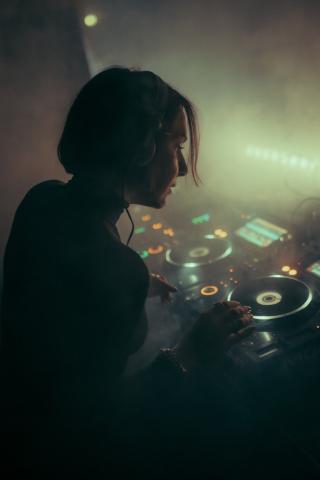
MARRØN, an established name on the international underground techno scene, approached the subject from a different angle. He acknowledges the influence of algorithms but refuses to let them dictate his artistic identity. Just because one video performs particularly well doesn't mean the next post needs to repeat the same formula.
What struck me was his preference for raw, unpolished videos shot by people in the crowd over slick, professionally produced festival footage. To him, those spontaneous recordings capture what it actually felt like to be there.
Not the perfect camera angle, but the perspective of someone who was genuinely on the dancefloor.
And there's the contradiction again. We want visitors to put their phones away, yet their spontaneous footage can be a valuable way for artists to reach new audiences.
“I won't use the festival's pro video; I'll use someone's sneaky video from the dance floor, because that's how people feel, and people relate to that. ”
The commercial value of online popularity also came up. Anastasios Diolatzis from Greece's Reworks Festival explained that follower counts don't determine which artists he books. He'd rather travel to hear them perform and decide what they could add musically to his festival. MARRØN raised an interesting counterquestion: isn't being able to programme that way a privilege? An established festival with a loyal audience may find it easier to follow a purely artistic vision than a new club that desperately needs every ticket sale.
British PR professional Emma Chambers highlighted another downside of chasing online popularity. She knows examples of artists with impressive follower numbers whose ticket sales were so disappointing that shows had to be cancelled. Apparently, a huge online following is no guarantee of a packed dancefloor. Let alone an audience that genuinely connects with the artist or the music. And once again, it takes me back to my own experiences during ADE. An impressive production doesn't automatically create an impressive connection. Just as a packed tent doesn't necessarily mean an engaged crowd. Sometimes that special energy emerges in a small, dark room where hardly anyone can see what's happening.
Yet we expect artists to maintain a constant online presence. They need to stand out, remain authentic, keep pushing artistic boundaries and simultaneously produce content that performs well within the logic of social media. And if DJs are increasingly expected to become content creators, what exactly do we expect from their audiences? Should people simply dance, listen, discover and surrender to the music? Or are we secretly hoping they'll reach for their phones, tag our artists and share their excitement with the world?
As organisers, we want people to completely immerse themselves in the music. As marketers, we're delighted when they pull out their phones and share their experiences. That contradiction forces us to question not only what we expect from artists, but also what we actually want from our audiences.
From drum machines to artificial imagination
So where does that leave us? The official aftermovie shows what the organiser wants us to see. The sneaky video from the dancefloor shows what it actually felt like, but we've banned people from making it. If we're no longer supposed to film the night, perhaps we need to start imagining it instead. And that's where things get uncomfortable in my line of work. With generative AI, visual artists can now create entire worlds from scratch. Surreal landscapes, strange architectural environments and hallucination-like figures that translate the atmosphere of electronic music into places that don't exist in reality. Yet I encounter a lot of resistance, especially within the cultural sector. Sometimes even when artists themselves supply AI-generated visuals to promote their music.
There's something rather ironic about that. When acid house and new beat emerged in the late 1980s, people were asking a similar question: is this even music? Machines instead of musicians. The Roland TR-909, hardly a commercial success when it first appeared, would later become one of the beating hearts of house and techno. But those pioneers weren't using technology to imitate reality. They were creating something that had never existed before. And look what came out of it. A global culture of music, fashion, art, technology and the night.
But don't get carried away, miss Broeren! A drum machine is played by a musician, while generative AI can build on the work of creators who never gave permission for their work to be used. That raises entirely legitimate questions about copyright and the position of artists. And for a technology capable of imagining almost anything, AI produces a suspicious amount of the same stuff. Glossy bodies. Futuristic masks. Endless neon worlds. Still, I think it's far too easy to dismiss AI as an artistic tool altogether. Digital image manipulation was once viewed with suspicion too. Today, hardly anyone questions whether an artist can create something original using Photoshop.
So why, when it comes to AI, do we focus so much on the machine and so little on the person behind it? Developing your own visual language, experimenting with prompts, constantly refining the results and carefully selecting what works requires imagination, artistic judgement and a strong sense of aesthetics. Of course, not everything made with AI is art or great campaign material. But the same applies to anything made with wet clay, Adobe InDesign, a paintbrush or a camera.
For me, the dividing line isn't simply between human and machine. It's between artistic imagination and deception. Presenting a fictional packed dancefloor as footage from a sold-out event is misleading. An artist using AI to develop an original visual universe around a musical concept, on the other hand, can create art. And a campaign that promises an experience the actual event can never live up to has missed the point, with or without AI. That's precisely the tension I find so interesting. Remaining curious about what technology makes creatively possible, without losing our critical perspective on how we choose to use it.
What I take home from the dark
After five days of ADE, my phone contains photographs and videos, including that short clip of Oscar Mulero at Dockyard. But some of my most beautiful experiences exist without a single image to prove they happened.
Not the crowded stairways at RADION. Not the cuddles and the conversations beneath the parasols in the pouring rain. Not the extravagant characters inside the former Bijlmerbajes. And yet those memories are still vivid. A warm glance. An unexpected, tender encounter. The feeling of sharing something almost impossible to explain with complete strangers. Those are the moments when the night sometimes gives me more than I even realised I needed.
And on Tuesday evening, back home on my sofa, I watch that little video of Mulero one more time. The sound doesn't come close to the enormous speakers at Dockyard. And no camera can truly bring back the warmth, the smells or the electricity of that moment. But for a brief second, I can feel it all again. And that was exactly why I filmed it.